
QR Menu Security: How Businesses Can Protect Against Fake QR Codes
The biggest strength of a QR menu is that a tiny code on the table opens everything — and that's also its biggest weakness. You can't read what's inside a QR code by eye, so when someone sticks their own label over the real one, the customer can't tell. The good news: the precautions are simple and almost free.
How does a fake QR code attack work?
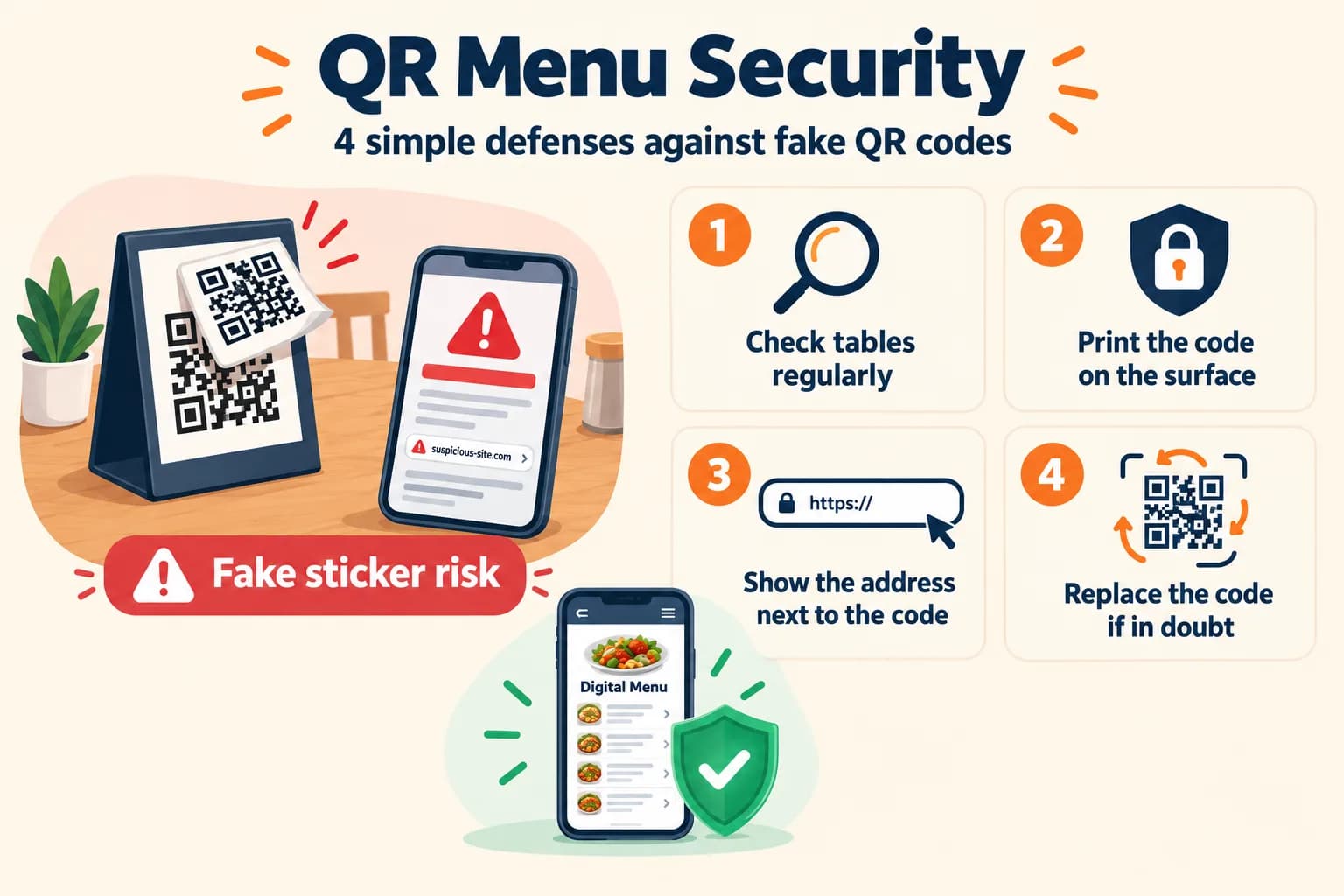
The attacker places a QR sticker of their own over the real code on the table. When the customer scans it, a fake page opens instead of the menu, and that page may try to collect personal details, card details or login credentials. This kind of attack is commonly called "quishing" (QR code phishing).
What your business can do
- Check your tables regularly. Looking for stickers placed over your codes at opening and closing takes only a few minutes.
- Build the code into the surface. Use a code printed directly on the stand or table card rather than a sticker; an extra label placed on top will stand out.
- Print the address next to the code. Add the domain the menu opens on in small text under the code so careful customers can compare the two.
- Use your own domain or a trustworthy platform. The code should only point to an address you control.
- Never ask for payment or personal data on the menu screen. A menu page should only show the menu; a "enter your card details" request from a QR menu should raise suspicion.
- Brief your staff. If a customer says "the menu sent me to a strange site", the team should know what to do: remove the code right away and put a new one on the table.
Building customer trust
Customers are increasingly aware of this risk. If the menu screen shows your logo, your name and your familiar colors, it reinforces the sense that the code went to the right place. Keeping a few printed menus on hand is a simple safety net for guests who don't want to scan or who feel unsure.
What if a code is compromised?
If you suspect a table's code has been tampered with, reprinting and replacing that table's code is enough. That's another reason a separate QR code per table is easier to manage: a problem at one table doesn't affect the whole menu.
Conclusion
QR menu security doesn't require technical expertise; regular checks, sensible code placement and a reliable platform remove most of the risk. You can keep the speed and flexibility of a digital menu while protecting your customers' trust.